Eradicating Fire Ants with Hot Water

Joshua King, Ph.D.
February 4, 2016
If you ever see an anthill, big or small, on the sidewalk, in a field, or even in your own backyard, it’s most likely the home of a fire ant colony—specifically, the red imported fire ant (solenopsis invicta) which is an invasive species that was accidentally imported on shipping crates to the United States in the early 20th century. If you’ve ever had the bad luck of stepping on one of these anthills, then you painfully know how these exotic insects are an unwelcome presence. These tiny but fearsome imports are an expensive, persistent problem. According to the FDA, it is estimated that more than $5 billion is spent annually on medical treatment, damage, and control in infested areas. Additionally, these ants cause roughly $750 million in annual agricultural damage, including veterinarian bills, livestock loss, and crop loss.
Fire ant stings are a common occurrence in the United States, with between 30 to 60 percent of people (out of 40 million people total) who reside in fire ant-infested areas stung each year. Fire ants mainly live in Southeastern states such as Alabama, Florida, Georgia, Louisiana, Mississippi, and Texas. These pests are also found as far west as California.
This pestilence is more than a domestic problem. The U.S., along with Taiwan and Australia, all have ongoing national programs with efforts to control or eradicate fire ants, but their strategies remain stymied. Australia has an intensive program, costing 175 million Australian dollars, yet the fire ant problem has not been completely eliminated.
Despite the challenges of finding an effective way to control fire ants, there is a solution that is cost-effective, non-toxic, and environmentally friendly. Joshua King, Ph.D., an entomologist and associate professor from the University of Central Florida, has created a system that utilizes large amounts of hot water. The water is heated on demand at a temperature of 150°F or higher and applied to ant colonies via a pressure wash wand, immediately killing the ants. This device can provide short and long-term control of fire ants or other ground-dwelling insects such as termites, wasps, and yellow jackets, over hectares of land.
In addition to larger sections of land, such as beaches or pasture land, this method can also be used for smaller scale applications, such as your backyard. Currently available methods involve chemically treating the fire ant mound or using broadcast baits. However, chemical treatments eradicate most, not all, of the ants in the colony, and a new colony could crop up within a few week; and broadcast baits can take months to eliminate a colony. King’s method is more potent and kills the ants instantaneously.
—
If you’re looking to take the sting out of life with fire ants and other pest species, this technology is available for licensing. Contact Benjamin Neymotin for more information.
Startups, Start Here: Startup-Friendly Innovations in the UCF Tech Transfer Technology Locator
January 27, 2016
Technologies available for license from the Office of Technology Transfer (OTT) are an opportunity to turn potential into profit. When taking any technology to market – whether defense or diagnostics, photovoltaics or photonics – you’ll need a few resources to make this happen such as time, capital, and know-how. In future installments of this series, we will present more on how startup companies can access these and other valuable resources, through programs at UCF.
In this week’s post, we focus on the first step in launching new businesses—identifying innovative solutions to pressing problems. The OTT Technology Locator is an online database featuring novel technologies developed at UCF. Within this database, we’ve curated a collection of special startup-friendly technologies called Startups, Start Here.
These technologies are ready for implementation and can be developed into products with fewer resources—namely, capital. Technologies highlighted for their accessibility in the Startups, Start Here collection are just as impactful as others you’ll find in the Technology Locator database and are suitable for new business formation. Read on and click the links to learn about some of our startup-friendly gems.
Facial Recognition and Identification with Significantly Reduced Storage Requirements
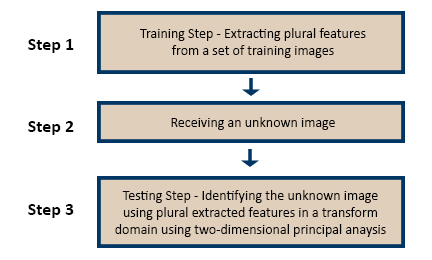 Facial recognition software is increasingly becoming commonplace in our everyday lives. Mainly used by law enforcement agencies (e.g., to capture faces in crowds of people and to issue and track visas), this technology is now being implemented in banks and airports to improve crowd screening and security. One issue with currently available technologies is that they require large amounts of data storage to maintain and process captured images. UCF researchers have created an algorithm that will improve the accuracy, storage, and computational properties of facial image classification/recognition. This unique algorithm leads to an approximate 90 percent reduction in storage space required without sacrificing the level of recognition accuracy. The technology could be used not only for facial recognition, but also signature verification and other types of pattern recognition.
Computer Recognition of Human Movements from Any Angle
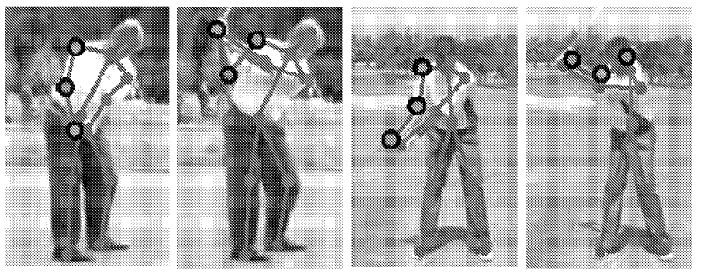
This Method of Identifying Human Poses Charts a Body Pose as a Triplet of Points
The field of human activity recognition has blossomed over the last few years, thanks to new and potential applications in video surveillance, physical therapy, and sports. The main challenges, however, include perception distortions, differences in viewpoint, and unknown camera parameters. UCF researchers have developed a method to identify human poses from video sequences, regardless of variables such as camera angles and specifications. This method charts a pose as a triplet of points, which surpasses conventional methods that study the human body as a whole. This technology can be applied to any user interface based on gestures including smartphones, robotics, or gaming.
Significantly Reduce Internet Traffic from Video Streaming
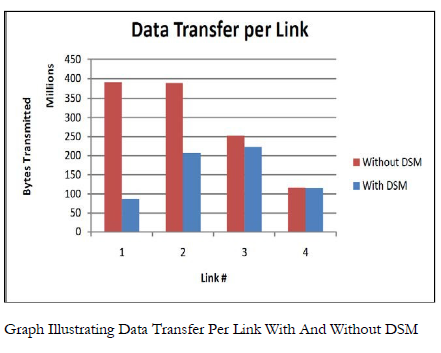 Before the advent of video and audio streaming, users mainly logged onto the Internet for composing emails and browsing the Web, and thus the Internet Superhighway allowed data to flow openly and freely. Now, with services such as YouTube, Netflix, and Spotify, more than 70 percent of peak Internet traffic in North America comes as a result of on-demand streaming. In fact, it has been projected that by 2019, 80 percent of Internet traffic will be from streaming, leaving little room for other activities.
This projected increase in data usage has caused content providers and Internet service providers to search for new solutions to handle traffic that can significantly slow Internet speeds, especially during unforeseen special events (e.g., an unexpected death of a famous musician can cause huge usage spikes for online music and video content providers).
A novel method called Dynamic Stream Merging (DSM) enables the transmission of large amounts of data on the Internet while accommodating Internet on-demand surges. This robust network data-access environment provides desired traffic management, even during times of unexpected high demand. As a result, customers experience significantly reduced Internet traffic, higher efficiency within Internet networks, and lower costs.
Advanced Skills Screening to Identify Valuable Personnel
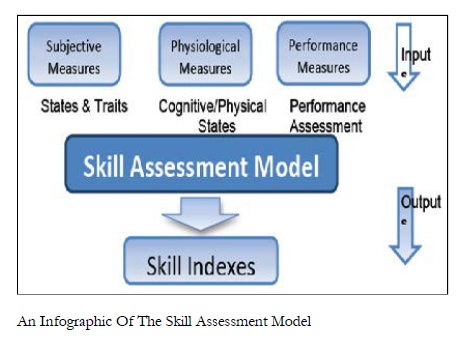 When it comes to hiring the best candidate for your organization, an effective skills screening process can offer some much needed insight. Currently available methods use either subjective or performance measures, which have been proven unreliable, time-consuming, expensive, and uninformative as to real-time abilities and projections of future performance. The Skill Assessment Model utilizes three types of qualitative testing measures to ensure reliable individual evaluations: subjective, physiological, and performance. Combined, these measures provide an index of applicable skills for the candidate. Not only is this method faster and cheaper than other advanced skill assessments, it is also transferrable across individuals and tasks (i.e., no need to re-create the model for a different task or a different group of individuals performing the same task).
—
These examples highlight a few of the many technologies available for licensing in a wide variety of fields. If you’re ready to disrupt an industry with UCF technology, contact us to start the conversation.
Written by Deborah Beckwin.
Startups, Start Here: Launching a Tech Company Based on University Research
January 13, 2016
At the end of last year, our special blog series, From Idea to Marketplace, focused on the licensing process at UCF. We are starting 2016 with a new biweekly series, Startups, Start Here, which will explore the entrepreneurial resources available at UCF, specifically for startup companies licensing university technology.
Here’s a list of what we’ll be covering in this series in the coming weeks:
- We will highlight some startup-friendly technologies available for licensing through the Office of Technology Transfer.
- Through this month’s Faculty Feature, we have already introduced one faculty member with experience in creating startups at UCF. We will feature additional success stories of companies that were started by faculty, students, and alumni with UCF technology and utilizing UCF resources.
- Our sister group, the Venture Accelerator Lab, will discuss subjects such as accelerators, Small Business Innovation Research (SBIR) funding, commercialization grants, and angel funding.
- We will present other groups and services aimed at assisting startups such as I-CORPS, Blackstone Launchpad, the Florida Institute for the Commercialization of Public Research, and the Florida High Tech Corridor.
—
Last month, the Bayh-Dole Act celebrated its 35th anniversary. Before this legislation, the federal government owned the rights to the intellectual property created as a result of research funded with federal dollars. The Bayh-Dole Act enabled universities to retain ownership of inventions arising from federally funded research and to facilitate commercialization of these inventions through licensing agreements with the private sector. The universities took on the responsibility of examining the commercial impact of new intellectual property and ensuring that innovations moved from the lab to the marketplace, so they could make a positive impact on our everyday lives. Since then, technology transfer offices blossomed across the country, and can be found in over 230 academic institutions. More and more universities are invested in the process of protecting and commercializing inventions created on their campuses.
Although there is a growing trend in conducting applied research with defined commercialization plans, traditionally, federal research dollars (e.g., funding from organizations such as the National Science Foundation and the National Institute of Health) were primarily awarded for basic research—to expand our knowledge of science and technology. Thus most of the discoveries that will come through a university technology transfer office are quite nascent for the marketplace.
This is why university startups are important. They can help to develop and then sell the technology, which may eventually become acquired by a larger company who can incorporate the new technology into existing products or processes or create a new product line.
—
A university startup is a little different from some of the startups you’re more familiar with, such as Uber, Airbnb, Tinder, PillPack, and YikYak, with one very notable exception of Google, which began as a result of research at Stanford University. The key difference between an industry startup and a university startup is that the former typically begins with solving a problem in the marketplace (a cheaper or more efficient way to do x). The latter starts with an idea based on research results and then looks to identify applications of the idea and what problems it could solve. Technology transfer offices in universities must examine the viability of these ideas in the marketplace. Put simply, although it may work in the lab, it could be too expensive or cumbersome to make into a product to be sold.
What’s similar between the two types of startups is the culture: it’s intense and requires a lot of time and effort up front to get the innovation to a more marketable, practical place. As America’s Partnership University™, UCF provides a variety of resources and services to faculty and students to support them in their entrepreneurial endeavors. You’ll learn more about them in the coming weeks and months.
—
If you want to learn more about how the Office of Technology Transfer can help you bridge your invention from an idea to the marketplace, contact us and let’s start a conversation.