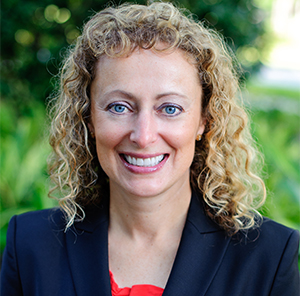
Meet Director Svetlana Shtrom, Ph.D.
 October 28, 2015
Svetlana Shtrom, Ph.D. is the Director of the Office of Technology Transfer (OTT). She joined the office in 2007 and has over 16 years of experience in business development and technology management. Svetlana holds an MBA from UCF, was a postdoctoral fellow at the National Institutes of Health (NIH), and received a Ph.D. in Cell Biology from the University of California at San Francisco and a B.S. in Molecular Genetics from the Ohio State University. Svetlana serves on the Board of Directors and is the Chair of the Professional Development Committee of BioFlorida.
Prior to joining UCF, she consulted for biotechnology companies and venture capital firms in business growth and technology evaluation. She also managed business development at several emerging biotechnology companies focused on development and manufacture of clinical diagnostics. Before working in biotechnology industry, she was a Technology Transfer Specialist at the National Cancer Institute (NCI) where she facilitating partnerships with industry, academia, and non-profit organizations.
What is your typical day like?
The majority of my daily activities are focused on intellectual property (IP) management, technology commercialization, and economic development. I meet with faculty and student researchers to discuss their discoveries and the optimal strategies for protecting the IP and identifying partnership opportunities to develop these discoveries into products. I also meet with entrepreneurs, investors, and business professionals to introduce them to our innovative technologies and to our researchers to facilitate research collaborations and commercialization partnerships.
What is the vision that you have for OTT?
The OTT is a key component of the UCF innovation infrastructure. We are here to serve the researchers and to facilitate partnerships with entrepreneurs, investors, and companies to move university discoveries into the marketplace. For the past several years, we have focused on optimizing our processes and enhancing our outreach activities, resulting in higher number of deals executed and startup companies formed. Our reputation for exceptional service and successful deal flow is growing. I would like to see the OTT continue to reach new highs and be viewed by all of our clients, internal and external to the university, as an indispensable partner in innovation.
What is OTT’s mission?
Our mission is to cultivate and support world-class research, commercialization, and economic growth. We support this mission by fostering the creation and commercial development of intellectual capital that can solve today’s pressing problems, improve the quality of life for the world, and provide an engine for economic growth for Central Florida and the nation.
What are OTT’s FY2016 goals?
Our goals are to increase the number of commercialization deals we execute and to increase the number of sustainable companies we launch.
What is most challenging about licensing university IP?
The most challenging aspect of our job is securing rewarding partnerships to develop university discoveries into commercial products. As typical for most universities, inventions arising from basic research tend to be at an early-stage; however, industry partners usually seek proven technologies to bring into their company’s pipeline. We work closely with our faculty researchers to assist them in securing additional resources and funding to further test and develop their discoveries to generate proof-of-principle data and to build prototypes. We often partner with entrepreneurs, investors, and the industry in multiple dimensions, including collaborations, sponsored research, and licensing rights. We approach every relationship with openness and flexibility to create a meaningful partnership that is poised for success.
What makes you the most proud about the licensing process here at UCF?
In FY2015, we partnered with 30 companies/investors/entrepreneurs in licensing our technologies. Of these 30 partners, 14 were new startup companies. With all of the licensing challenges I described, we still manage to secure a significant number of partnerships with almost half of these partnerships resulting in creation of new companies. I am very proud of the dedicated team of professionals in our Technology Transfer group and their commitment not only to seek out and close deals, but to continue to support and nurture these partnerships.
Who is your ideal licensee?
An ideal licensee is passionate about building a business around the university technology he/she is seeking to license and is prepared to dedicate time, effort, and resources into building this business. Also, it is, of course, much easier to negotiate a deal with a partner who is experienced in licensing intellectual property from an academic institution. These licensees understand that the technology they are licensing is at an early stage, and they are prepared to seek out and secure additional resources to develop the technology into a successful product line.
Overall, what are the ingredients of success for a licensor/licensee relationship?
I think that for a relationship to succeed there needs to be trust, openness, and flexibility on both sides. Many different inputs, considerations, and constraints influence negotiation of a contract. We view a signed contract not as an end result, but as a new beginning to a meaningful partnership. We approach every deal with a long-term view and offer as much flexibility as possible to set up our partner for success. Some legal elements of a contract are absolutely required, and we are honest and clear with our prospective partner as to the rationale for the requested terms, so that we are much more likely to reach a compromise. Our goal is to end a negotiation so that both sides feel optimistic about the new partnership and are committed to maintaining the positive relationship.
If you’re interested in disclosing your UCF invention or licensing UCF technology, contact Svetlana Shtrom to get the conversation started.
Meet Assistant Director Andrea Adkins
October 21, 2015
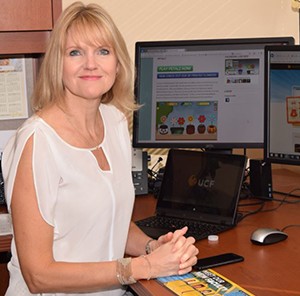 Andrea Adkins is an Assistant Director in the Office of Technology Transfer at the University of Central Florida. Andrea works with scientists and students, as well as legal and industry representatives, to protect and commercialize intellectual property originating from research and educational activities conducted at UCF. A UCF graduate with a Master of Science in Research Administration, Andrea joined UCF’s Office of Research & Commercialization in 1999. Prior to joining UCF, she worked in business development for the engineering and construction industries. She also co-founded and operated a small business providing manufacturers’ representative services.
What is a typical day for you as a licensing associate?
Although I am an Assistant Director, many of my daily activities are focused on protecting and licensing intellectual property developed in the College of Engineering & Computer Science and the NanoScience Technology Center. What that really means is I spend my work day listening and learning about new discoveries in the labs, reading and responding to many and varied requests from inventors, patent attorneys, licensees, and prospective licensees, as well as drafting and reviewing legal agreements for licensing and sponsored research activities. I am also frequently asked to meet with visitors to the university labs to understand their interests in working with UCF and then recommending how we can work together to achieve the desired outcome, given my knowledge of the university’s policies and procedures.
I also spend time helping university staff and students understand university policies and procedures as it relates to intellectual property ownership and uses.
Tell us about your most successful licensing process.
Success is hard for me to quantify when it comes to licensing. And my bosses, or the inventors I serve, may answer this very differently. Is success simply a negotiated license agreement? Or, is it the amount of income generated by the university’s technology for the licensee, university and inventors? Or, is it a product or service that improves our lives? For example, I have licensed software that my fellow research administrators and researchers are using to do their jobs at campuses in New Mexico and Nevada. I have licensed technologies that improve water quality, provide radiation protection for healthy cells in cancer patients, and detect speeding vehicles on highways. I consider all of these a success.
While there isn’t one license experience or process that stands out to me more than another, one that surprised me the most was a request from Warner Brothers to license posters created by UCF’s College of Sciences for use on the hit TV show The Big Bang Theory. Although it generated no income for the university, the license process was easy and quick. The team at Warner Brothers was great to work with by being responsive and cooperative with university policies and procedures. Although I have watched many episodes of TBBT, I haven’t spotted one of UCF’s posters in a scene!
What insider tips would you share to researchers interested in licensing their technologies?
The process for protecting and licensing technologies is not quick, would be my first tip! And my second is that unless I receive a new invention disclosure before you publically disclose it, I may not have anything to protect and license. Lastly, in addition to your research and teaching responsibilities, be prepared to invest time for commercialization activities to ensure the best chance of success.
As many researchers know who are working closely with the Tech Transfer team, we all spend a lot of time on leads and requests for more information on the technologies developed in the lab. Usually an interested party wants to know if the researcher’s work included certain experiments or tested a particular use related to the business interests of the inquiring party. The time spent may possibly lead to a license or lab funding. It’s an investment in time that carries these rewards and risks.
Who is your ideal licensee?
My ideal licensee is one who works diligently with me to execute a license quickly. Post-license, the ideal licensee is one who delivers as agreed, or communicates timely with me when something changes. I expect conditions to change and will support the licensee and the university to remain flexible to modify terms of the license to help the licensee be successful.
Overall, what are the ingredients of success for a licensor/licensee relationship?
Timely response is the most influential factor for a successful licensor/licensee relationship. Listening to the needs of the licensee’s business and creating an agreement that reflects this helps to ensure success. It requires some creativity at times when negotiating terms and conditions. Inventors are also a very important ingredient. Respect, timely, and open communication between the licensing associate and inventors of licensed technology are key to maximizing the return of intellectual property investments and achieving success.
If you’re interested in disclosing your UCF invention or licensing UCF technology, contact Andrea Adkins to get the conversation started.
Written by Deborah Beckwin
From Idea to Marketplace: Industry Partners, How You and UCF Can Impact the World
October 14, 2015
Part 3 of 3-part series explaining the process of licensing technology
 As an intrepid entrepreneur or investor, you’re looking for technology that can not only increase the unique value to consumers, but also for technologies that can positively impact the world we live in. At UCF, the Office of Technology Transfer is looking for visionaries like you to partner with us to bring these types of innovations to the marketplace. We know that the relationship between academia and the private sector is important for human progress. Applied knowledge is the perfect amalgam of the worlds of research and commerce.
Technology transfer, or the transfer of technology, might be new to you. It’s a relatively new phenomenon, ushered in by the Bayh-Dole Act, or Patent and Trademark Law Amendments Act in 1980, which outlined how inventions were to be handled that arose from federally funded research. Specifically, instead of the government owning the intellectual property, a university, small business, or a non-profit organization could own it. This landmark legislation is what allows the commercialization of university-developed technologies to proliferate as they have. Almost thirty-five years later, this has become a multi-billion dollar industry that is ripe for rewarding investments.
So, where do you begin?
Take a Look Around – Discovery
You begin right here with the Technology Locator. This is our growing portfolio of patent pending and patented technologies available for licensing. They are organized by industry sectors and subsectors. To find technology solutions for your company, you can click on the sector subgroups, or you can use the search box to look for a particular keyword, invention or inventor. For each technology you’ll find a summary of the technology’s background, technical details, benefits, and applications, as well as information on how to contact the licensing associate for more information.
Let’s Talk – Due Diligence
After you find the invention(s) that you want to learn more about, contact OTT to get the conversation started. During these preliminary conversations, a number of things may happen.
- A Confidential Disclosure Agreement may be signed so you can get more disclosed information.
- To learn more about the invention, you may be introduced to the inventor(s).
- If you’re interested in conducting your own internal research on this technology, you may sign a Materials Transfer Agreement (MTA) so you can have access to samples or prototypes; or an Option Agreement to take the technology off the market while you’re evaluating it.
Coming to (mutually agreeable) Terms – Negotiation
When you have identified an invention that fits your company’s goals and are ready to license it for use, we will provide a Term Sheet detailing plans for exclusivity, field of use, grant of rights, and sublicense provisions. Every invention and every partner is unique, and so are the license agreements. When it comes to the financial concerns – royalties, license issue fees, minimums, milestone payments, equity, etc. – these terms are all customized to fit the needs of you and UCF.
The Licensing Agreement: A Sign of Our Partnership – Deal
Once we agree on the terms in the Term Sheet, a licensing agreement will be drawn up, which is also based on the legal terms of UCF’s policies. A typical licensing agreement will include items like developmental timelines, performance milestones, revenue projections, how the invention fits within your current priorities, and how you plan to bring the product to market—which is our ultimate goal.
When we agree on the terms of the agreement, then it is executed. At times, a licensing agreement is amended based on product development needs, milestones reached in the process, and other factors.
Out of the Lab and Into Consumers’ Hands – Commercialization
In order to ensure commercialization success, you will work closely with our licensing professionals, who will monitor performance and adjust milestones accordingly. Since this is UCF-owned technology, as a licensee you will be required to give us an annual report on the product development’s progress. We really want these innovations to make their way into the world to make it a better place, and we hope you can be a part of that process.
—
Are you ready to enter the more than $50 billion market of commercializing university-owned technologies? Are you ready to impact the world? We’re ready, and we’re waiting to hear from you.